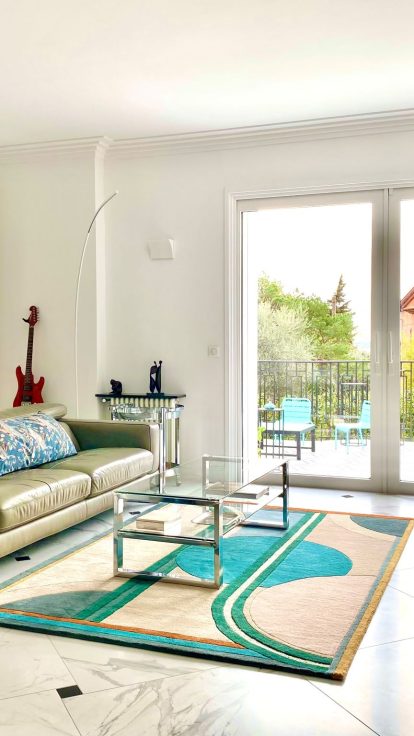
L’AGENCE Interior Design supports investors who purchase a rental building in Cannes to fully renovate it and put it on the rental market: property audit, design of each unit, electrical and technical plans produced in-house, construction managed through to the last apartment delivered. A single point of contact from initial survey to rental listing.
Why does renovation quality determine the rental rate?
A rental building becomes profitable at the rental rate line. In the Cannes rental market, active much of the year due to conferences and Croisette activity, finished, furnished, and polished properties position themselves at the top of the rental range. This is a market observation, not a yield guarantee: results also depend on location, management, and timing.
The consequence is counterintuitive for those thinking in terms of cost: renovation is not merely an expense to minimize, it also determines the rental positioning of each unit. A unit renovated on a budget competes with all others; an elevated unit competes with far fewer properties. We design to target this positioning; we do not guarantee a rental rate.
Our work consists of elevating the building unit by unit: floor plans redesigned for rental use, materials that withstand turnover, finishes that justify the target rent, custom furniture where it enhances a constrained space.
Our reference: an entire building in Paris
The firm conducted the interior renovation of a complete building in Paris, a program of twelve apartments intended for short-term rental.
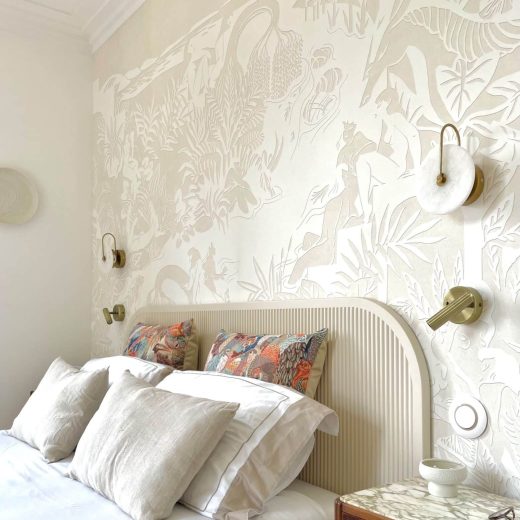
The approach is what matters most in this type of operation: each apartment was treated differently. No duplicated standard floor plan, no single palette repeated identically. Twelve distinct projects in the same building, at the same level of finish.
This project forged a conviction we now apply systematically: standardization loses money. Two identical apartments in the same building compete with each other on rental platforms and in the traditional rental market. Twelve differentiated apartments cover twelve demand segments, and one of them always finds a tenant.
The rental building and the hospitality market
A fully renovated building intended for short-term accommodation falls under what the sector calls hospitality: that set of activities ranging from traditional hotels to managed residences, including apartment buildings operated as a complete accommodation offering.
This clientele no longer seeks hotels. They seek a place, with character, a kitchen, a living room, décor that endures. This is precisely the meeting point between the interior design profession and investment logic: what creates use value for the occupant creates yield for the owner.
In Cannes, the seasonality of conferences further amplifies the effect. Demand is driven by professional clientele, whose stays are covered by companies, who focus on property quality more than price.
How do we work with an investor?
The process follows our three-phase method, applied at the building scale rather than a single residence.
Property audit first: actual condition of structure and systems, assessment of each unit’s potential, identification of what will require structural study. Design next, aesthetic and technical, with itemized costing unit by unit, allowing quality level decisions apartment by apartment. Construction finally, coordinated with weekly meetings and phased scheduling to avoid immobilizing the entire building at once.
The investor makes decisions based on figures—budget per unit, schedule, finish level—not intentions. Electrical and technical plans are produced in-house, a structural engineer intervenes only on structural matters, and the firm carries ten-year liability insurance and professional liability coverage.
Cannes buildings and their pitfalls
In Cannes, rental buildings are predominantly bourgeois buildings in the center and small older condominiums. The pitfalls are known and similar: fatigued structures, wooden floors requiring repair, electrical and plumbing systems to be completely redone, shared utility risers, narrow stairwells that complicate material delivery, and condominium regulations when the building is not wholly owned.
None of these issues is insurmountable. All are expensive when discovered after the purchase deed. This is why we recommend a visit before making an offer.
Frequently Asked Questions
Do you intervene before the building purchase?
Yes, and it is the best time. A visit with the firm before the offer allows estimation of the actual scope of work, identification of major items, and avoidance of purchasing a hidden budget. This often changes the price one is willing to pay.
Can you renovate an occupied building?
It depends on the configuration and possible unit-by-unit phasing. The question is resolved in the initial audit, with a schedule adapted to successive vacancies.
Should common areas be addressed?
Yes, and it is often the most profitable item in the operation. The lobby, stairwell, and landings are the first thing a prospective tenant sees, before even entering the unit. A building with neglected common areas caps the rents of all its apartments.
Do you do this work for a single rental apartment?
Yes, the same logic applies at the unit scale. For a property intended for seasonal or short-term rental, also see our page dedicated to turnkey second homes.
How do you prevent units from competing with each other?
By genuinely differentiating them: distinct floor plans, distinct palettes, distinct layouts. This is what we applied in the Paris building, where each apartment received its own project. Two identical units at the same price in the same building mutually drive down the rent.



